If you want your solar mounting system to last for decades, regular maintenance is essential. A proper solar mounting maintenance checklist in South Africa helps prevent corrosion, loose components, structural damage, and long-term performance issues.
At Solar Mounting Solutions, we supply durable mounting kits and components designed for South African conditions — but even high-quality systems should be inspected regularly to ensure optimal performance and safety.
Register and get 5% off your first order of solar mounting kits and components.

Why Solar Mounting Maintenance Matters
Many people focus only on solar panels, but the mounting system is what keeps everything secure.
Without proper maintenance, issues can develop over time, including:
- Loose brackets and clamps
- Corrosion from coastal weather
- Rail movement from wind exposure
- Water ingress around mounting points
- Structural instability
Regular inspections help identify these issues early before they become expensive problems.
How Often Should Solar Mounting Systems Be Checked?
A solar mounting system should ideally be inspected:
Every 6–12 months
After major storms or strong winds
After roof repairs or maintenance work
In coastal regions like Durban or Cape Town, inspections are even more important because salty air accelerates corrosion.
Solar Mounting Maintenance Checklist
Here’s a step-by-step checklist to help maintain your mounting system.
1. Inspect Solar Rails for Corrosion or Damage
Solar rails support the entire solar array, so they must remain structurally sound.
What to look for:
- Surface corrosion
- Rail bending or movement
- Loose rail connections
- Signs of stress or cracking
High-quality aluminium rails resist corrosion well, but inspections are still important in harsh environments.
Explore durable Solar Rails designed for South African weather conditions.
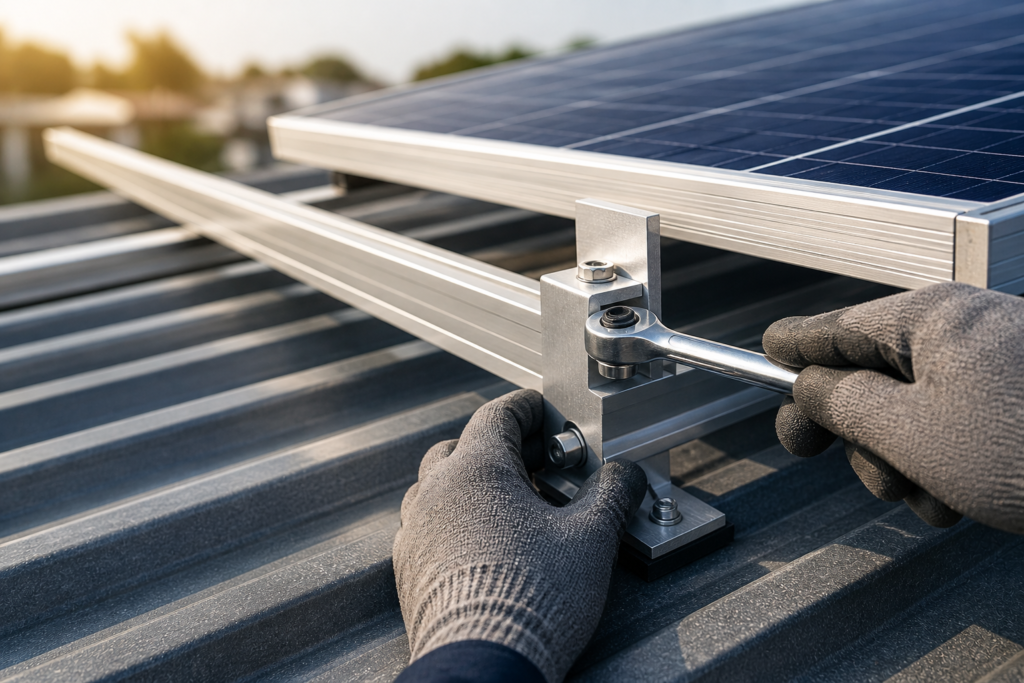
2. Check All Clamps and Fasteners
Clamps hold panels securely to the rails. Over time, vibration and weather exposure may loosen bolts or fasteners.
Inspect:
- Mid clamps
- End clamps
- Stainless steel bolts
- Roof fasteners
Tighten any loose components carefully using the correct torque settings.
Browse Solar Panel Clamps for replacement or upgraded components.
3. Inspect Roof Mounting Points
Roof mounting points are critical because they connect the solar system directly to the roof structure.
Look for:
- Water leaks around penetrations
- Rust around brackets or screws
- Cracked roof tiles
- Damaged flashing
This step is especially important on:
- Corrugated metal roofs
- IBR roofs
- Tiled roofs
4. Check for Corrosion in Coastal Areas
Coastal conditions in South Africa can be harsh on mounting hardware.
Why corrosion happens:
Salt in the air accelerates oxidation, especially if low-quality metals are used.
How to prevent it:
Use anodised aluminium rails
Use stainless steel fasteners
Replace damaged components quickly
At Solar Mounting Solutions, we use premium materials designed for coastal durability.
5. Inspect for Wind Damage
Strong winds can slowly loosen mounting systems over time.
Check for:
- Rail movement
- Loose brackets
- Bent clamps
- Panel shifting
High wind areas should be inspected more frequently, especially after storms.
6. Remove Dirt and Debris Around Mounting Components
Leaves, dust, and debris can trap moisture around mounting hardware.
Maintenance tips:
- Keep drainage areas clean
- Remove debris around rails
- Prevent standing water buildup
Clean mounting systems last longer and reduce corrosion risk.
Common Solar Mounting Problems to Watch For
Understanding common issues helps prevent major repairs later.
Loose Fasteners
Fasteners naturally expand and contract due to temperature changes.
Galvanic Corrosion
This occurs when incompatible metals react together.
Rail Misalignment
Improper movement can affect panel positioning and structural load distribution.
Roof Penetration Leaks
Damaged flashing or worn seals may allow water into the roof structure.
How Long Do Solar Mounting Systems Last?
You should replace components if you notice:
- Visible corrosion
- Bent rails or clamps
- Cracked brackets
- Loose hardware that no longer tightens securely
Replacing worn parts early helps prevent larger structural failures.
Protect Your Solar Mounting System Today
Routine maintenance protects your solar investment and ensures your mounting system performs safely for years
Register and get 5% off
Shop: Solar Rails
Panel Clamps
Metal Roof Mounting Kits
Need help choosing the right kit? Contact Us
FAQs
Solar mounting systems should be inspected every 6–12 months and after severe weather events.
High-quality aluminium rails do not rust, but regular inspections are still recommended.
Salt air, moisture, and incompatible metals can cause corrosion over time.
Yes. Loose clamps may allow panel movement and increase structural stress.
Yes. Removing debris helps prevent moisture buildup and corrosion.